
Explainers
How supplements work in the body, shown on real anatomy. Each one is interactive and takes a few minutes.
 PotassiumHow potassium lowers blood pressureMore potassium lowered blood pressure by about 5/3 mmHg in people with high blood pressure. The leading explanation: the kidney keeps less sodium.Interactive, 11 min read
 IronHow the gut absorbs iron and how hepcidin limits itIn women with low iron stores, an iron dose of 60 mg or more raised the liver hormone hepcidin, and a dose 24 hours later was absorbed 35% to 45% less.Interactive, 11 min read
 Vitamin CHow the kidneys keep vitamin C and pass high doses into urineThe kidneys take back all the vitamin C they filter until the blood level passes the renal threshold: on average 48.5 µmol/L in men and 58.3 µmol/L in women. Above it, the extra goes into urine.Interactive, 8 min read
 Vitamin DHow vitamin D becomes a hormoneThe liver turns vitamin D into 25(OH)D (half-life about 15 days). The kidneys then make calcitriol, the active hormone (half-life about 15 hours).Interactive, 6 min readWhat caffeine does to the heartIn people with high blood pressure, 200 to 300 mg of caffeine raised it by about 8/6 mmHg for at least 3 hours. In one trial, days with coffee brought more early beats of the ventricles.Interactive, 9 min read
 CalciumWhere the calcium from a supplement goesWith a meal, the gut absorbs about 30% of a 500 mg dose of calcium. In people over 50, daily calcium supplements raised bone density once, by 0.7 to 1.8%. Joint cartilage has no blood vessels.Interactive, 9 min read
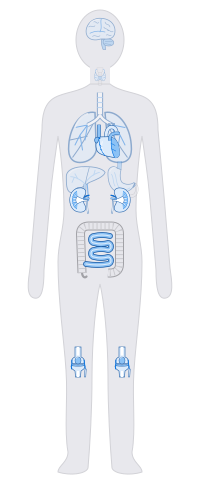
Heart (1)
Kidney (4)
PotassiumHow potassium lowers blood pressureMore potassium lowered blood pressure by about 5/3 mmHg in people with high blood pressure. The leading explanation: the kidney keeps less sodium.Interactive, 11 min readVitamin CHow the kidneys keep vitamin C and pass high doses into urineThe kidneys take back all the vitamin C they filter until the blood level passes the renal threshold: on average 48.5 µmol/L in men and 58.3 µmol/L in women. Above it, the extra goes into urine.Interactive, 8 min readVitamin DHow vitamin D becomes a hormoneThe liver turns vitamin D into 25(OH)D (half-life about 15 days). The kidneys then make calcitriol, the active hormone (half-life about 15 hours).Interactive, 6 min readCalciumWhere the calcium from a supplement goesWith a meal, the gut absorbs about 30% of a 500 mg dose of calcium. In people over 50, daily calcium supplements raised bone density once, by 0.7 to 1.8%. Joint cartilage has no blood vessels.Interactive, 9 min readSmall intestine (3)
IronHow the gut absorbs iron and how hepcidin limits itIn women with low iron stores, an iron dose of 60 mg or more raised the liver hormone hepcidin, and a dose 24 hours later was absorbed 35% to 45% less.Interactive, 11 min readVitamin CHow the kidneys keep vitamin C and pass high doses into urineThe kidneys take back all the vitamin C they filter until the blood level passes the renal threshold: on average 48.5 µmol/L in men and 58.3 µmol/L in women. Above it, the extra goes into urine.Interactive, 8 min readCalciumWhere the calcium from a supplement goesWith a meal, the gut absorbs about 30% of a 500 mg dose of calcium. In people over 50, daily calcium supplements raised bone density once, by 0.7 to 1.8%. Joint cartilage has no blood vessels.Interactive, 9 min read